Welcome to my Moonbox: a gathering of musings, learnings, and aspirations held (perhaps, sometimes only briefly) by the many expressions of me, Sarita.
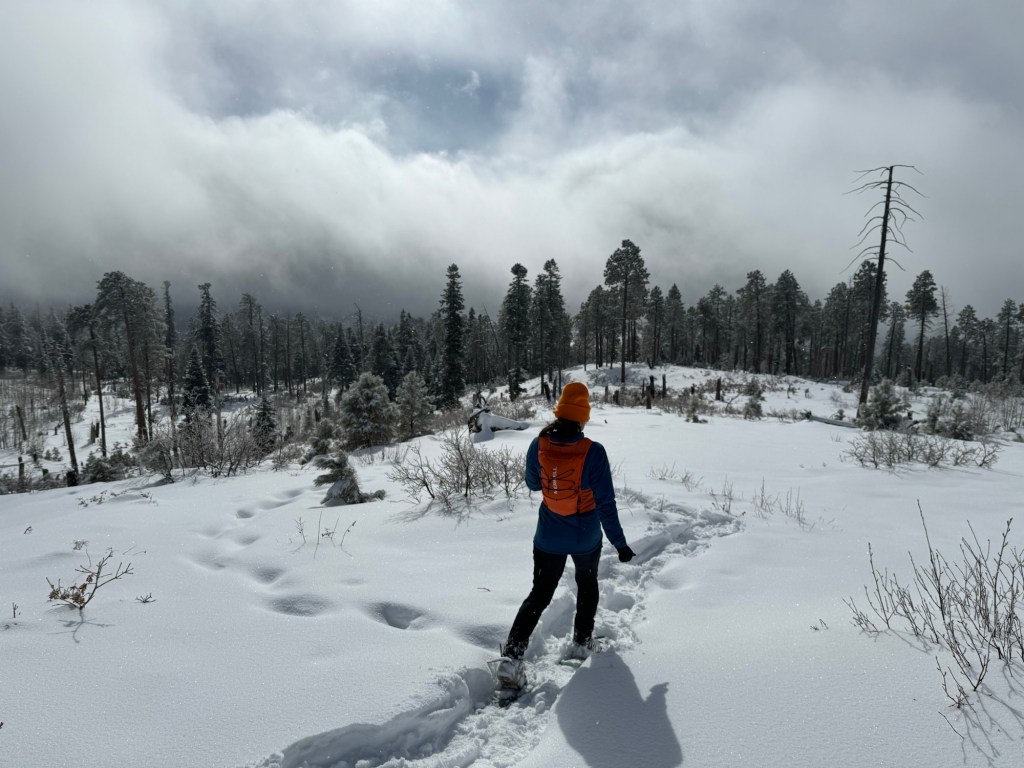
From a kitchen table in another city:

something else about selfies

she holds her phone up like a mirror
camera as reflection
beholds herself for two strong seconds
then pockets the alive and glowing
she walks aboard the airport rail
and if it were a real pocket mirror
as in classic glass and silver pane
I wouldn't have paid so much attention—
what is it being a camera, expecting her
to tap, such self-analysis
amid a crowd—what is it
that makes me uneasy, exposes
social bias, we shouldn't behold
such things as ourselves and
something else about selfies—
but I couldn't see her face
until she did so, and I stared
for two strong seconds
into the same pane of glass
watched her witness calm visage, she
did not smile nor tilt her head
nor pucker lips nor do anything, she
gazed, but not so simply, as if out
a window on winter eve
as I do now, remembering
something about land (and beauty)
and wanting it to always
want
us
back.
On my mind:
Identidad Americana
I was born on Tongva land near a city named in Spanish, in California, pronounced now with an English tongue: Los Angeles. I grew up in a suburban town turned city with a name that is both Spanish and English: Chino Hills. Despite the obvious Spanish context, my community was as the city name describes: Asian American (in majority, not exclusivity). I was born in the year of the dragon. I celebrated Chinese New Year with my friends. I learned to take my shoes off at doorways. But at home, no one really thought about where shoes went. We ate tostadas, chile colorado, tamales, tacos, rice, and beans. Ceviche was my dad’s favorite. Yet, we also ate like “Americans”: pizza, soda, hot dogs, hamburgers. Life was a melting pot of generations, of language, of food. All of this provides context, but what did growing up teach me about identity?
There are, maybe, too many layers. My ancestry is not Tongva, nor is it from Asia. I was called Mexican, but I was not born in Mexico. All sorts of people made jokes about beaners and wetbacks. Though, my family has been in the Americas since before modern borders. Since before the United States and even before México. I’ve known a vague mestiza story, but genetics is a wild thing. I recently learned that my American DNA (30.5%), which I mostly inherited through my dad and his mom, comes from the Chiapas Highlands and Tabasco in what is now southern México, where the Tzotzil and other Cholan-speaking (Mayan language family) people still live. I also have DNA from East Central México, particularly San Luis Potosí and southwestern Tamaulipas. My sister’s DNA report (whose Native genetics are significantly higher than mine at 37.8%), however, lists the Upper Santiago River Basin instead of East Central México, which is basically the same region but focuses on Zacatecas and Aguascalientes instead.
My maternal grandfather mother’s lineage descends from Haplogroup B2, which (coldly?) refers to Pueblo groups in regions that are now known as New Mexico and Arizona (but I did not genetically inherit much from her, largely due to my grandpa marrying a woman purely of European descent). A significant chunk of my DNA (25.3%) descends from the Iberian peninsula, which today is split by Spain and Portugal, and the rest of my DNA numbers come from all over Europe (a lumped 39.9%) and Sub-Saharan Africa (2.2%). All of this is just more context (genetic, historical)—what does it actually tell me about identity?
Is identity taught to you? Is it something you’re allowed to claim for yourself, despite what you’ve been told or shown by numbers? What I do know is that it is supposed to describe the communities you come from or have deep ancestral connections with. But everything I learned about being “Mexican” was through social (often derogatory) context and English history books. My family had assimilated. English was the only language at home. Frozen pizzas. Liters of soda. Taco Bell. El Pollo Loco. We stopped making tamales for Christmas. My childhood best friend, who was born in Taiwan, told me one day, when we were young, that she believed everything had a spirit, like trees and rocks, and I laughed. I was Catholic. I was Western. I was American. And I didn’t understand anything at all.
Sometimes identity isn’t something spoken, it is indoctrinated, because what would have been spoken was no longer deemed valuable, appropriate, safe.
My paternal grandmother, whose genetics are 70% Indigenous to the Americas, brags about how well and how quickly she spoke English growing up. How her dad forced her to sit at the dinner table and read from the English dictionary with perfect pronunciation. She tells this story as a mark of a successful transition to Americanness and fails to see it as colonizing violence.

I struggle to conceptualize learning about ancestry in terms of numbers on a screen, of percentages of blood. If anything, it makes me really sad to know that my grandmother, being very much Native to American soil, has no awareness, has no interest, has/had no community telling her who she really is. She is everything colonialism wanted. My siblings and I are everything colonialism wanted. And it makes me so angry, because I don’t have the words to really talk about identity in a meaningful or accurate way.
Every English or Spanish word that exists to describe me or my family fails, because these words have been used to place whiteness above all else. Mestiza. Estadounidense. Ladino. Mixed-race. Hispanic. Latina. I am physically not a person of color, so people say I am a person of culture, because, while I am not physically very brown, I descend from brown people, or, an ethnic group (but this fails to recognize that whiteness is also culture — we are all people of culture). Plus, most of these words exist to placate whiteness. They exist because whiteness did not want mixed people to belong to their Indigeneity (except when it came to Blackness). And I hate knowing that many of my ancestors used such privilege, such nearness to whiteness, against their own Indigenous peoples and homes.
A blanket statement, I’m sure. I don’t doubt that much of that was forced. Was survival. And I do know of relatives who grew up poor and discriminated against for their brownness. The Anglos vs. “Mexicans.” They experienced segregation in southwestern New Mexico, and not so long ago, just two generations back.
I was born on Tongva land thousands of miles away from where my ancestors originated, in all contexts. My consciousness woke to America, where most things have been renamed, mispronounced, built over, assimilated, appropriated, exploited. It is either that I know nothing about identity, because such precious knowing was erased from my family, or that I can only ever know what it is to be white-washed in America. That I am white because that is the only box someone like me is allowed to check on Government papers. When my very brown grandmother dies, her death certificate will say, Race: White, Ethnicity: Spanish (which is what happened to my maternal grandfather). When I die, at least my skin will match more closely…(insert eye roll and discussion about colorism).
I would love to know the demographics of the U.S. if all of us mixed people refused to acknowledge the white supremacy held over our bodies and lineages (though, how that would be done, I do not know). What if, in some sweeping Indigenous future, we were all reclaimed, even if that ancestry is in México. I bet those “white” numbers would drop.
But Indigeneity isn’t simple. Being genetically and/or culturally mixed isn’t simple, either. And I know that whiteness often describes privilege, religion, and skin color more than it does genetics. Whiteness is ideology, but I’m not going to pretend to understand it all. I don’t want to be a Pretendian. I don’t want to take away from those who need and deserve to be heard, seen, helped. History has been cruel to Indigenous populations and culture. I can’t show up to the Tzotzil people in Chiapas with my 23andMe results. I would likely inflict harm given the history of Ladino (mixed) rights over those of the Tzotzil. The enslavement. The stealing of land. Not to mention the power that the United States currently holds over the world, over culture, over privilege. I know nothing about what it is to live in México, let alone Spain, or anywhere in Europe.
Because of my context, genetic or otherwise, and the delicateness of defining race, it often feels like I can only ever be an ally to even my own ancestry, as opposed to an active participant in ancestral knowledge and culture (I mean, for one, my American ancestry is diverse itself, spread out, or unknown and absent/erased from family record/story — where would I even begin? How do I appropriately unwind my Mexicanness?).
While everything in me wants to decolonize and learn everything I can about what and who was once not white or white-passing in my lineage, I cannot deny that history happened. That I look the way that I do because of admixture (i.e. colonization). That whiteness likely dictated movements in my family to arrive in California. That I am still a product of the colonial culture that surrounds me (i.e. me choosing to better my Spanish to connect with my Mexicanness). And I don’t doubt there is harm being done by people like me trying to understand our Indigeneity, despite our greatest intentions.
Maybe some of you have wondered why I always share so much about Indigenous People. I hope this piece answers that for you. It is because I have an affinity for All My Relations (the belief that we are all related); it is because I have a duty to learn about and uphold the pieces of me that have been ignored by society, education, and even the communities I grew up in (who perhaps just didn’t know any better, either), etc; it is because I’m tired of hearing about whiteness in the outdoor industry, in art, in anything mainstream; it is because of history and the erasure that took place, and I want to use my privilege, and whatever platforms I have access to, to center Indigeneity.

As for myself: truly, I am vague. I am confused. I am lost. I am, well, American. This is the consciousness I awoke to. These are the words that exist to describe me. But what does all of this say about today? Tomorrow? One thing is clear: I will continue to promote Indigenous (and others’) voices, art, and teachings. Even though I personally feel like I don’t fit in with any one group (a sentiment exacerbated by identity politics that don’t allow for me to be anything other than colonized), the point is this, for myself, for everyone: What happens next? What will you do? How will you help others? How will you change for the better, knowing what you know?
HBD to all January birthdays.
[Related: Moonbox Notes #20]
Recent Top Pick Reads:
+ “Nicholas Galanin Looks Past Trauma to Recovery,” by Stacy J. Platt, Hyperallergic, Jan 24, 2024. Platt takes the reader through a current exhibit in Santa Fe, NM, and discusses Galanin’s art and commentary, focusing on how Galanin’s work is future-facing (Indigenous futurism) and is all about taking care — whether that means returning Indigenous artifacts to their rightful people or showering an Indigenous child with words of love.
+ “Taking the Next Step: The Running, Art and Activism of Yatika Starr Fields,” by Brent Terry, Run In Rabbit Blog, Dream Chaser Series, Dec 8, 2023. “The magic is in not trying to understand the process, in having the confidence, the courage to be comfortable when the outcome is unknown,” says Fields. A great article about Fields and his lifestyle.
+ “How to Be a Good Savage,” by Mikeas Sánchez, Orion Magazine, 2024. Orion shares two poems from Sánchez’s book How to Be a Good Savage and Other Poems (Milkweed Editions, 2024). Her book of poetry has been entirely written in her Indigenous language, Zoque, and translated into Spanish and English by Wendy Call and Shook.
+ “Photographer Leanne Dunic Wants to Misdirect Your Eye,” by Leanne Dunic, Orion Magazine, Arts & Crafts Articles, Winter 2024. A wonderful piece written in the artist’s own words about the multidisciplinary work that she does, about the liminality, about subtlety, poetry, and amphibiousness. Particularly in regards to her unedited, yet layered photography, she discusses how humans inherently shape the environment and the lens from which we peer.
Books/Mags in progress:
+ The Hundred-Year Flood by Matthew Salesses
Recent Listens/Watchings:
+ “Looking ahead to the 2024 election; plus, getting ‘sober curious’ for Dry January,” It’s Been a Minute Podcast with Brittany Luse, NPR, Jan 5, 2024. A really great discussion about current politics in the U.S. regarding the two-party system, projections, trends, and how potent a presidency can actually be. Plus, a really great dive into sobriety, about how U.S. society has a small, but growing awareness surrounding not drinking alcohol — that it’s an option, and not ordering a drink is socially acceptable.
+ “Coree Woltering on Being Black, Gay, and Sober in the Outdoors,” A Walk In The Park with Malik tha Martian, Episode 1, Outside Watch, Outside Online, 2024. They discuss an array of topics while walking (and eventually running) on treadmills set up outside in a park. I enjoyed the casualness of this interview set-up and also the humor, but there are also gems of true commentary about sobriety, race, sexuality, and chasing one’s dreams.
+ “Applying an Indigenous Mindset: A Trip Through the Daily News w/ Connor Ryan,” Conspiracy of Goodness Podcast with Dr. Lynda Ulrich, YouTube, Jan 23, 2024. A refreshing conversation about current topics and history via the viewpoint of Ryan’s traditional Lakota being and knowledge. A really great documentary I watched about pre-colonization America helped inform me about what Ryan gets into and that can be viewed here. Also, I recommend reading: An Indigenous Peoples’ History of the United States.
+ The New Yorker Documentary Series: “Sub Eleven Seconds,” featuring Sha’Carri Richardson, film by Bafic, text by Murat Oztaskin, Mar 16, 2022. “Two Spirit,” featuring Georgina (cw: transphobia), film by Mónica Taboada Tapia, text by Danielle Mackey, Dec 21, 2022.
Writing/Projects: (updates are highlighted)
+I have a short piece with Outside Online due to publish in early February.
+I currently have one general submission in the ether: a short nonfiction piece entitled, “El Viento.”
+The hybrid essay/memoir I wrote in 2021, “Chuckwalla,” still needs some major revision and writing.
+I have a Science Fiction novella that I’ve been slowly working on since 2017.
Merrell Life (new section!)
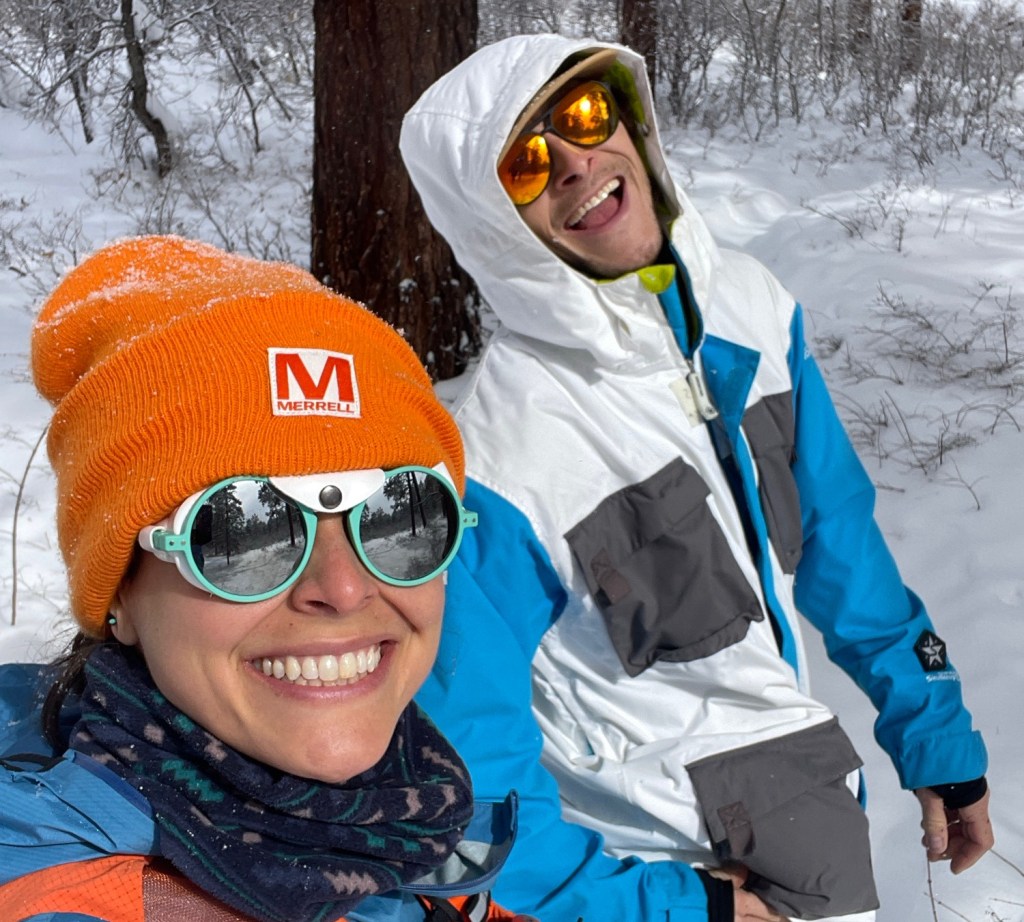
- My sponsorship with Merrell has begun!
- My first 2024 race is in Bryceville, FL, the Angry Tortoise, on February 24th. I will be racing the 25K.
- I will also be racing the Broken Arrow Skyrace 23K in late June.
- Winter training has been going “okay.” I have had some older issues flare up a little bit. After some dry-needling, one issue is on the mend. But I’m hoping to get some massage therapy done soon!
MISC/Brags:
- Patrick celebrated 4 years of being an electrician this month! His return to the trades has been a definite life upgrade for both of us.
Thanks for tuning in to Sarita’s Moonbox.
Happy Winter!
 bivytales.com
One thought on “Moonbox Notes #21: Enero”